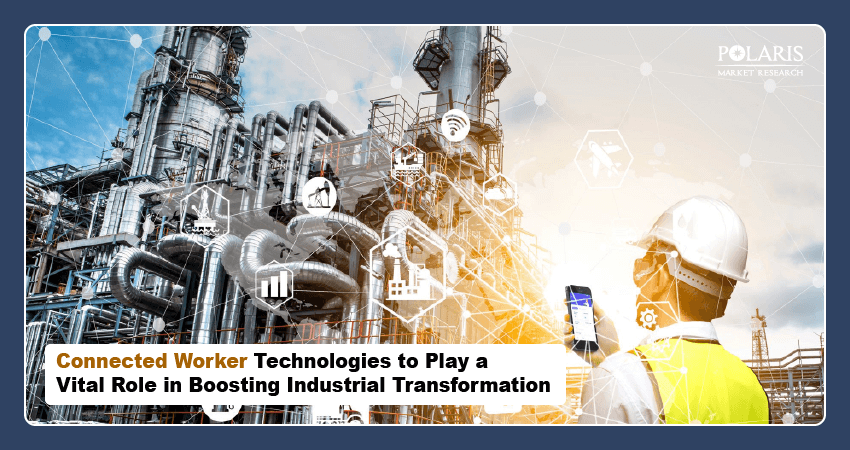
Workforces globally are changing fast. Digital tools and real-time communication systems are transforming the way people work. A key aspect of this change is the idea of the connected worker. This approach provides employees with instant access to information and tools whenever they require.
This blog post explores the concept of connected worker in more detail. It also covers why the connected worker market demand continues to grow. Keep reading!
Connected Worker: Overview
The continuous evolution of the digital world has had a significant impact on human lives. Nowadays, digital technology plays a crucial role in all types of business organizations, increasing efficiency and productivity. Most organizations have already adopted connected worker solutions to maintain proper connectivity with their workers and achieve higher profit margins. Additionally, the solution ensures worker safety through remote tracking systems and better regulatory compliance. Connected worker solutions notify companies about unexpected accidents in the field and reduce the risk of errors, thereby driving adoption in the market.
Connected Worker Market Stats
The connected worker market stood at USD 7.79 billion in 2024, as per the latest analysis by Polaris Market Research. It is expected to grow at a CAGR of 22.3% between 2025 and 2034.
Technologies Enabling Connected Worker
Wearable Devices
Wearable devices, based on solutions from the wearable technology market, give employees real-time information and support without interrupting the operation in which they are engaged. Smart helmets and augmented reality glasses let workers see what they are doing without having to hold the instructions. Smart gloves and vests can derive vital signs and information about movement and dexterity. Even boots containing sensors can recognize slips and falls. Wearables promote safer, more efficient, and informed work.
Mobile and Handheld Devices
Mobile devices enable employees to access manuals, fill out checklists, scan barcodes, and communicate with supervisors in real time. They offer a lighter option to traditional paper copies, enabling better organization and easier employee connections from anywhere in the operation.
Augmented Reality and Virtual Reality
AR tools give feedback to a worker's view of the world electronically, in order to assist in following directions or identifying issues. Virtual reality market tools give employees a simulated training environment in which they can practice their tasks. These tools promote better learning, accuracy, and confidence.
Key Market Dynamics
- The connected worker platform reduces the flaws in work mostly caused by manual processes, thereby helping the worker execute the task properly without incurring any risk.
- Real-time data gathering is one of the key features that benefits organizations by enhancing their operational matrices, offering exponential growth for the global market.
- Increasing safety concerns and stringent regulations regarding workforce safety are primarily creating scope for the market.
- Rising broadband internet penetration, increasing use of smartphones, growing inclination towards technological solutions, and the adoption of IoT are further supporting the growth of the connected worker market.
- Increasing demand for mobility, the rising need for a collaborative working environment, and the necessity to improve workforce productivity are creating more opportunities within the market at both the domestic and global levels.
- Continuous research and development are underway in this field to bring new functionalities to the solution, further creating market opportunities.
Regional Market Assessment
In terms of revenue generation, North America holds a larger share of the market and is expected to maintain its lead in the coming years. The presence of well-established and financially stable telecom infrastructure is helping the region grow at a rapid pace. The BYOD trend has significantly impacted the regional market, accelerating growth. Moreover, the growing demand for automating tasks and the increased user base of mobile devices created lucrative opportunities in the region.
Increasing technological advancements, coupled with the introduction of low-cost innovative products, are expected to boost demand for connected worker solutions in the European region. Several new ventures are expanding their operations in the market, complementing the overall growth prospects in both developing and developed countries.
Conclusion
The connected worker market signifies a major change in how industries function. Wearable devices, mobile tools, cloud-based software applications, real-time communication, and sophisticated analytics enable organizations to build workplaces that are safer and more supportive. For workers, that means less guesswork, faster access to knowledge while on the job, better safety, and easier collaboration with teams. For industries, that means improved productivity, fewer mistakes, and possibly the ability to keep up with modern operational demands.