
Spatial Genomics & Transcriptomics Market Size, Share, and Global Outlook, 2026-2034
REPORT DETAILS
Spatial Genomics & Transcriptomics Market Summary
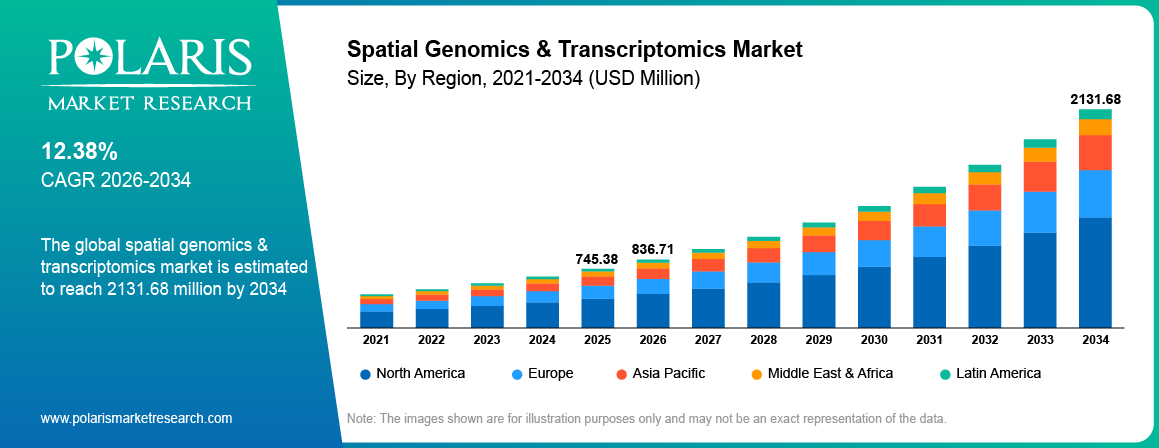
Spatial genomics & transcriptomics market size was valued at USD 745.38 million in 2025. The market is anticipated to grow from USD 836.71 million in 2026 to USD 2131.68 million by 2034, exhibiting a CAGR of 12.38% during the forecast period.
Market Statistics
Key Takeaways
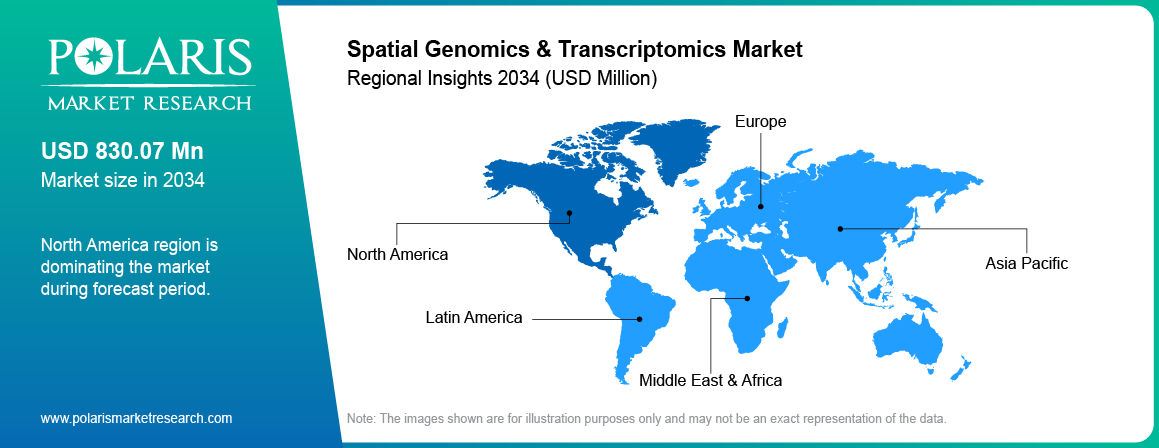
- North America held 37.0% of the global market in 2025. The region led the market because of its strong healthcare system and high investment in genomics research.
- Asia Pacific is expected to grow at a CAGR of 14.20% during 2026–2034. Growth is supported by expanding biotechnology research and government initiatives.
- The spatial transcriptomics segment is expected to grow at a CAGR of 12.90% during 2026–2034. The increasing use of this technique for studying gene expression is driving its growth.
- The consumables segment accounted for 52.0% of the market in 2025. The regular consumption of consumables in research and laboratory workflows contributed to the leading share of the segment.
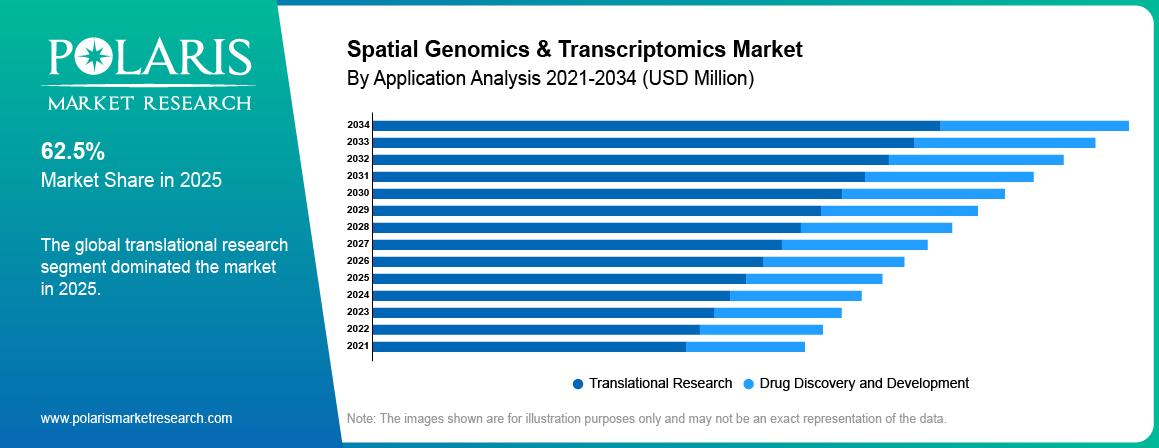
- The translational research segment accounted for a share of 58.0 % in 2025. The increasing research on disease biomarkers and personalized treatments is driving the growth.
- The academic research institutes segment accounted for a share of 43.0% in 2025. Spatial genomics technologies are increasing with the rising funding and collaborations.
Note: Figures and projections outlined in this report are the result of Polaris Market Research’s proprietary analytical processes, grounded in the latest available datasets and market observations.
What Are Spatial Genomics and Spatial Transcriptomics?
Spatial genomics and transcriptomics look at genes and their activity without losing their position in a tissue. This gives a better picture of processes in cells. The method is widely used in spatial omics technology in cancer and brain research. It also enhances molecular profiling, allowing the investigators to study changes in diseases and identify helpful biomarkers.
How spatial genomics and transcriptomics work
The process starts with collecting and preparing a tissue sample. Next, spatial omics technology captures molecular information while keeping track of where it is located within the tissue. The DNA and RNA activity is measured. This shows what different cells are doing, and where those changes are happening.
To get a more holistic view of the tissue, imaging and sequencing data are integrated. Computational genomics tools are used to order the data into spatial maps. Researchers then examine these maps to gain insights into cell function, discover biomarkers and better understand disease progression. The information is also applied to drug discovery and precision medicine.
Source: Polaris Market Research Analysis
To Understand More About this Research: Download Sample Report
Spatial Genomics & Transcriptomics Market Driver Analysis
Rising Prevalence of Cancer
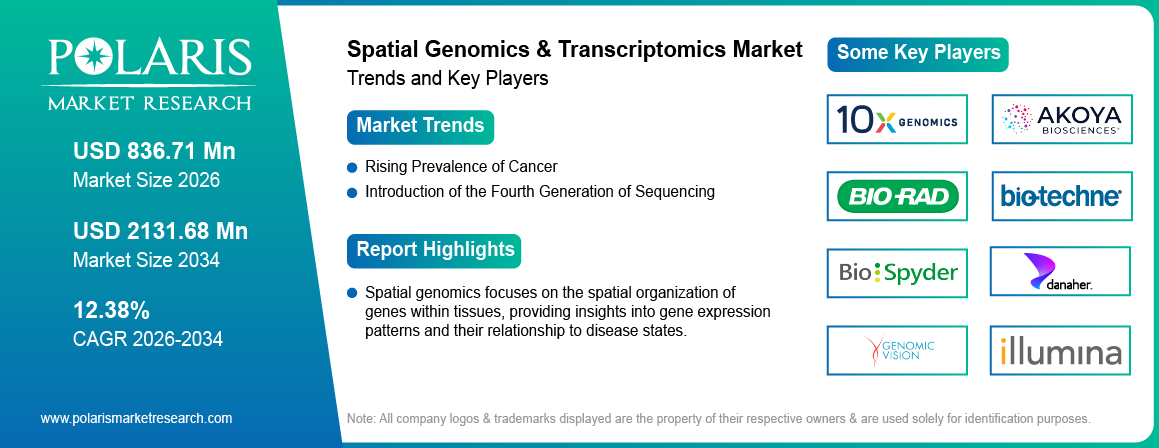
The rising prevalence of cancer is fostering the spatial genomics & transcriptomics market. According to the World Health Organization, over 35 million new cancer cases are predicted in 2050, a 77% increase from the estimated 20 million cases in 2022. Cancer is highly heterogeneous, meaning that even within a single tumor, there can be a wide variety of cell types with different genetic and phenotypic characteristics. Spatial genomics and transcriptomics enable researchers to study the spatial distribution of these cell types, providing insights into how tumor heterogeneity influences growth, metastasis, and response to treatment.
Introduction of the Fourth Generation of Sequencing
The introduction of the fourth generation of sequencing is significantly boosting the spatial genomics & transcriptomics market. Fourth-generation sequencing technology has reduced the cost of genomic analyses. More affordable sequencing enables broader adoption of spatial genomics and transcriptomics techniques in both research and clinical settings, making it accessible for a wider range of studies, particularly those focused on cancer and other complex diseases. Additionally, fourth-generation sequencing often includes advanced multiplexing techniques, enabling the simultaneous analysis of multiple samples or conditions. This feature enhances the efficiency of experiments, facilitating large-scale studies that incorporate spatial genomics and transcriptomics.
Spatial Omics and Precision Medicine
Spatial omics is making precision medicine more effective by showing what is happening inside different parts of a tissue. It supports researchers find patient-specific biomarkers and improve disease classification. This information will assist in personalized treatment strategies and specific therapies. Biomarker discovery technology helps identify important disease markers, while precision oncology solutions improve treatment planning for cancer and other complex diseases.
Importance of Spatial Omics in Cancer Research
Spatial omics is revolutionizing the way cancer is studied by revealing the location of different cells within a tumor. It is used in tumor microenvironment analysis, cancer cell mapping, immune cell interaction study, drug response analysis and biomarker identification. Single cell genomics reveals a close view of individual cells while molecular profiling reveals the changes in gene expression across different parts of a tumor. This supports researchers better understand cancer and its complexity.
Spatial Genomics in Drug Discovery
Spatial genomics is becoming an important part of drug discovery. It is used to identify new therapeutic targets, understand disease pathways, evaluate treatment response, and improve candidate selection. Genomic research tools give researchers a better view of how diseases affect different cells within a tissue. This information supports improve early-stage research. Many pharmaceutical companies are also using spatial profiling to make drug development more efficient and improve research pipelines.
Spatial Genomics & Transcriptomics Market Restraining Factors
High Costs and Complex Data Analysis
The advanced technologies and equipment required for spatial genomics and transcriptomics are expensive. This limits accessibility for smaller laboratories and institutions, slowing down widespread adoption. Furthermore, the data generated from spatial omics techniques are vast and complex. Analyzing this data requires advanced computational tools and bioinformatics expertise, which may not be readily available in all research settings, thereby hampering the market.
Spatial Genomics & Transcriptomics Market Size and Growth Outlook
Spatial genomics focuses on the spatial organization of genes within tissues, providing insights into gene expression patterns and their relationship to disease states. This approach allows researchers to visualize and quantify gene activity in situ, enhancing the understanding of tissue heterogeneity and cellular interactions. Similarly, spatial transcriptomics combines traditional transcriptomic analysis with spatial information, enabling the profiling of gene expression at a single-cell resolution. This capability is crucial for studying the tumor microenvironment, where cellular interactions play a pivotal role in cancer progression.
The rising drug discovery and development worldwide is propelling the global spatial genomics & transcriptomics market. Spatial genomics techniques reveal how different tissues respond to drugs at the molecular level, helping to predict efficacy and resistance mechanisms. This information is critical for optimizing drug development strategies. Therefore, as drug discovery and development spurs, the demand for spatial genomics & transcriptomics also increases.
The rising focus on human tissue and cell analysis to determine and develop diagnosis methods and cures is positively influencing the global spatial genomics & transcriptomics market. For instance, in February 2024, DNAnexus, a cloud-based platform that provides tools for managing and analyzing data to help researchers and healthcare professionals, closed a deal with Curio Bioscience to effectively streamline spatial transcriptomics data analysis and enhance accessibility to the tissues and species dataset.
Spatial Genomics vs. Traditional Genomics
| Feature | Spatial Genomics | Traditional Genomics |
| Information | Genetic data with its location in the tissue | Genetic data only |
| Tissue Context | Tissue structure is preserved | Tissue structure is often lost |
| Cell Interaction | Shows how cells interact with each other | Provides limited information on cell interactions |
| Applications | Tissue mapping technology, disease analysis, and biomarker studies | Genome sequencing and genetic analysis |
Source: Polaris Market Research Analysis
Spatial Genomics & Transcriptomics Market Drivers, Opportunities, Restraints and Challenges
- Rising cancer cases are increasing the use of spatial genomics and transcriptomics for better disease understanding and treatment.
- Growing demand for personalized medicine is supporting market growth.
- New sequencing technologies are reducing costs and improving research efficiency.
- Increasing research funding and increasing applications are creating growth opportunities.
- High cost and complex data analysis are major challenges faced by the market.
AI Impact on Spatial Data Analysis, Biomarker Discovery and Workflow Automation
- AI makes it easier to analyze large spatial genomics and transcriptomics datasets.
- AI detects patterns and biomarkers that might be missed manually.
- AI speeds up drug discovery and personalized medicine research.
- Artificial intelligence can shorten the time it takes to analyze and interpret complex data.
Source: Polaris Market Research Analysis
Spatial Genomics & Transcriptomics Market Segmentation by Technique, Product, Application and End User
Market by Technique: Spatial Genomics and Spatial Transcriptomics
Spatial Transcriptomics Segment is Expected to Witness the Highest Growth
Spatial transcriptomics is projected to dominate the market in the coming years. This growth stems from its ability to provide rich information about gene expression at a cellular level while retaining spatial information, which is crucial for understanding developmental biology and disease progression. Furthermore, ongoing technological innovations, such as enhanced imaging and multiplexing capabilities, are making spatial transcriptomics more accessible and efficient. Researchers are increasingly drawn to this approach for its potential to unravel the complexities of gene regulation and interaction, particularly in fields including oncology and neurology. Spatial transcriptomics is set to become a foundation in future research and therapeutic strategies as these technologies evolve and demonstrate their value in clinical applications.
By Application Analysis
Translational Research Segment Held the Significant Market Revenue Share in 2025
In 2025, the translational research segment held the largest share of the market, primarily due to its crucial role in bridging the gap between laboratory discoveries and clinical applications. The integration of spatial genomics and transcriptomics into translational research enhances the ability to understand disease mechanisms in a spatial context, thereby facilitating the identification of new biomarkers and therapeutic targets. Furthermore, funding from the government and private sectors has significantly increased, supporting translational research initiatives that aim to accelerate the development of personalized medicine. This inflow of resources enables researchers to leverage advanced technologies, ultimately enhancing the success rates of clinical trials and improving patient outcomes.
Source: Polaris Market Research Analysis
Applications of Spatial Genomics and Transcriptomics
| Application | How It Is Used |
| Cancer research | Studies tumors and the tumor microenvironment. |
| Biomarker discovery | Finds biomarkers linked to different diseases. |
| Drug target identification | Identifies possible targets for new medicines. |
| Immunology research | Studies how immune cells respond to disease. |
| Brain and neurological disease studies | Examines changes linked to brain and nervous system disorders. |
| Developmental biology research | Tracks how cells and tissues develop over time. |
| Tissue mapping | Shows where different cells are located in a tissue. |
| Personalized medicine | Supports treatments based on a patient's disease profile. |
| Cell interaction analysis | Examines how different cells communicate and function together. |
Source: Polaris Market Research Analysis
Regional Insights
North America Region Registered the Largest Share of Market in 2025
In 2025, North America held the largest share of the spatial genomics & transcriptomics market, driven by significant investments in research and development, advanced healthcare infrastructure, and a strong focus on personalized medicine. The US emerged as the dominant country in this region, benefiting from its robust biotechnology sector and numerous leading research institutions that prioritize innovative technologies. The presence of major pharmaceutical companies and extensive funding from both government and private sources further fuel advancements in genomic and transcriptomic research. Furthermore, the increasing prevalence of cancer and other complex diseases in North America amplifies the demand for technologies that provide detailed insights into disease mechanisms, thereby enhancing the region's growth trajectory.
Asia Pacific is also projected to hold a dominant share of the market in the coming years. Countries such as China and India are rapidly advancing their capabilities in genomics and transcriptomics, supported by substantial government initiatives aimed at enhancing healthcare and biotechnology. The rising prevalence of chronic diseases in these countries drives the need for innovative diagnostic and therapeutic approaches. Additionally, the increasing number of collaborations between academic institutions and industry players in Asia Pacific fosters a conducive environment for technological advancements and research breakthroughs, thereby driving demand for genomics & transcriptomics.
Source: Polaris Market Research Analysis
Key Market Players & Competitive Insights
Prominent market players are investing heavily in research and development in order to expand their offerings, which will help the genomics & transcriptomics market grow even more. Market participants are also undertaking a variety of strategic activities to expand their global footprint, with important market developments including innovative launches, international collaborations, higher investments, and mergers and acquisitions between organizations. To expand and survive in a more competitive and rising market environment, the genomics & transcriptomics market must offer innovative solutions.
The genomics & transcriptomics market is fragmented, with the presence of numerous global and regional market players. Major players in the genomics & transcriptomics market include 10X Genomics; Akoya Biosciences, Inc.; Bio-Rad Laboratories; Bio-Techne Corporation; BioSpyder Technologies Inc.; Cantata Bio; Danaher Corporation; Genomic Vision SA; Illumina; Lunaphore Technologies SA; Miltenyi Biotec; NanoString Technologies, Inc.; Natera, Inc.; and Optical Biosystems Inc.
Major Players in Global Spatial Genomics & Transcriptomics Market
- 10X Genomics
- Akoya Biosciences, Inc.
- Bio-Rad Laboratories
- Bio-Techne Corporation
- BioSpyder Technologies Inc.
- Cantata Bio
- Danaher Corporation
- Genomic Vision SA
- Illumina
- Lunaphore Technologies SA
- Miltenyi Biotec
- NanoString Technologies, Inc.
- Natera, Inc.
- Optical Biosystems Inc.
Future Outlook for Spatial Biology, Clinical Diagnostics and Multiomics
The spatial genomics and transcriptomics market is expected to grow steadily in the coming years. As tissue mapping technology gains momentum in cancer research, drug discovery and precision medicine, demand is expected to increase. Advances in sequencing, artificial intelligence and multiomics will continue to drive the field forward. Wider use in research and clinical settings should also be prompted by greater access to biomedical research technology.
Recent Developments in Industry
- June 2026: Illumina introduced its StrataMap Spatial Solution, a spatial transcriptomics platform for whole-transcriptome profiling. The platform features a large tissue capture area, single-cell resolution, and sequencing of both coding and noncoding genes.(Source: https://www.illumina.com)
- February 2026: Singular Genomics launched the G4X system in the U.S. The platform is designed to support advanced research with ultra high throughput spatial multiomics analysis.(Source: https://www.singulargenomics.com)
- March 2026: Bioptimus and 10x Genomics launched STELA, the world's largest spatial biology atlas. It is built on the 10x Genomics Xenium platform to connect and analyze large scale spatial biology data.(Source: https://www.bioptimus.com)
- April 2025: Bio-Techne Corporation invested in an AI-powered spatial analysis system for imaging, aiming to integrate it into genomic workflows. The initiative was designed to boost user satisfaction and reduce data processing time.
- May 2024: 10x Genomics introduced “Protein Expression Assay & Visium CytAssist Gene” commercially to enhance the potential of Visium CytAssist spatial analysis.
- May 2024: Akoya Biosciences, a spatial biology firm, joined forces with NeraCare to produce melanoma tests, aiming to design skin cancer assays.
Spatial Genomics & Transcriptomics Report Coverage
The spatial genomics & transcriptomics market report emphasizes key regions across the globe to provide a better understanding of the product to the users. The report also provides market insights into recent developments and trends and analyzes the technologies that are gaining traction around the globe. Furthermore, the report covers an in-depth qualitative analysis pertaining to various paradigm shifts associated with the transformation of these solutions.
The report provides a detailed analysis of the market while focusing on various key aspects such as competitive analysis, technique, product, application, end user, and their futuristic growth opportunities.
Spatial Genomics & Transcriptomics Report Segmentation
By Technique Outlook (Revenue, USD Million, 2021 - 2034)
- Spatial Genomics
- Immunohistochemistry (IHC)
- In Situ Hybridization
- Sequencing Techniques
- Microscopy based RNA imaging
- Other Spatial Genomics Techniques
- Spatial Transcriptomics
- Immunohistochemistry (IHC)
- In Situ Hybridization
- Sequencing Techniques
- Other Spatial Transcriptomics Techniques
By Product Outlook (Revenue, USD Million, 2021 - 2034)
- Instruments
- Consumables
- Software
By Application Outlook (Revenue, USD Million, 2021 - 2034)
- Translational Research
- Drug Discovery and Development
By End User Outlook (Revenue, USD Million, 2021 - 2034)
- Academic Research Institutes
- Contract Research Organizations
- Pharmaceutical and Biotechnology Companies
By Region Outlook (Revenue, USD Million, 2021 - 2034)
- North America
- US
- Canada
- Europe
- Germany
- France
- UK
- Italy
- Spain
- Netherlands
- Russia
- Rest of Europe
- Asia Pacific
- China
- Japan
- India
- Malaysia
- South Korea
- Indonesia
- Australia
- Rest of Asia Pacific
- Middle East & Africa
- Saudi Arabia
- UAE
- Israel
- South Africa
- Rest of Middle East & Africa
- Latin America
- Mexico
- Brazil
- Argentina
- Rest of Latin America
Spatial Genomics & Transcriptomics Market Report Scope
| Report Attributes | Details |
| Market Size Value in 2025 | USD 745.38 million |
| Market Size Value in 2026 | USD 836.71 million |
| Revenue Forecast in 2034 | USD 2131.68 million |
| CAGR | 12.38% from 2026 to 2034 |
| Base Year | 2025 |
| Historical Data | 2021 – 2024 |
| Forecast Period | 2026 – 2034 |
| Quantitative Units | Revenue in USD million and CAGR from 2026 to 2034 |
| Segments Covered |
|
| Regional Scope |
|
| Competitive Landscape | Spatial Genomics & Transcriptomics Industry Trend Analysis (2025) Company Profiles/Industry participants profiling includes company overview, financial information, product/service benchmarking, and recent developments |
| Report Format | PDF + Excel |
| Customization | Report customization as per your requirements with respect to countries, regions, and segmentation. |
Source: Polaris Market Research Analysis
Spatial Genomics & Transcriptomics Market FAQs
The global spatial genomics & transcriptomics market size was valued at USD 745.38 million in 2025 and is projected to grow to USD 2131.68 million by 2034.
The global market registers a CAGR of 12.38% during the forecast period.
North America had the largest share of the global market in 2025.
The key players in the market are 10X Genomics; Akoya Biosciences, Inc.; Bio-Rad Laboratories; Bio-Techne Corporation; BioSpyder Technologies Inc.; Cantata Bio; Danaher Corporation; Genomic Vision SA; Illumina; Lunaphore Technologies SA; Miltenyi Biotec; NanoString Technologies, Inc.; Natera, Inc.; and Optical Biosystems Inc.
The spatial genomics segment is projected for significant growth in the global market.
The translational research segment dominated the spatial genomics & transcriptomics market in 2025.
Spatial genomics and transcriptomics study genes and their activity while keeping their location in a tissue. This gives a better understanding of how cells function in different areas.
Spatial transcriptomics measures gene expression within tissue samples while preserving spatial information. It combines imaging and sequencing to reveal the location of active genes.
Spatial omics is used in cancer research, biomarker discovery, neuroscience, drug development, precision medicine and disease research.
Spatial genomics keeps the location of genes within a tissue during analysis. Traditional sequencing studies genetic data but usually loses this spatial information.
Download Sample Report of Spatial Genomics & Transcriptomics Market
Please fill out the form to request a customized copy of the research report.


